
The government has developed an asset monetisation dashboard for monitoring real-time progress of its ambitious Rs 2.5 trillion-plus pipeline, and providing visibility to investors. The portal has been prepared as the government tries to provide a one-stop shop to investors keen on taking over assets of government departments and ministries.
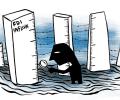
The Union Cabinet on Thursday approved a proposal to allow 100 per cent foreign direct investment (FDI) in public sector refiners, expanding the scope for FDI in the privatisation of Bharat Petroleum Corporation Ltd (BPCL). The approval by the Cabinet will enable the sale of the government's 52.98 per cent stake in BPCL to a foreign buyer, and, at the same time, will open the door for FDI in other public sector companies in the oil sector put up for privatisation.

The NITI Aayog has recommended privatisation of state-owned insurer United India Insurance Company as the government aims to move ahead with its new public sector enterprise (PSE) policy for Atmanirbhar Bharat. The policy think tank has suggested that the public sector insurer be considered for privatisation in the banking, insurance and financial services sector, which has been classified as 'strategic' in the PSE policy, said an official. The policy proposes the "bare minimum" presence of government-owned companies in strategic sectors, and privatisation, merger or closure of remaining public sector undertakings (PSUs).
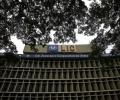
The government has reached out to investors to apprise them about Life Insurance Corporation of India's (LIC's) growth and prospects as it prepares for the country's largest initial public offering (IPO). Preliminary presentations have been made to inform investors on how the organisation is being restructured ahead of the IPO, along with its financials, so that the IPO process can be hastened once its embedded value is derived. "A detailed presentation has been made to investors, giving them details on how LIC is positioned beyond what is known. "This includes how LIC is being restructured ahead of the IPO, and investors are keen to know that," said an official. In the Finance Bill, 2021, the government had proposed a slew of changes to the LIC Act, 1956.

'While there has been an impact on economic activity, it is not as profound as the lockdown last year.'

'Technology is streamliming the entire process of aid distribution and making it transparent and digital.'


With the disruption caused by the second wave of Covid-19 pandemic, the 'fear of unknown' is looming over the government's privatisation drive. Although there is a lot of uncertainty and unpredictability on how things will unfold, the government is hopeful of completing the transactions listed in the Budget with a delay of one to two months, said a top government official. However, "there are many unknown factors now, and we do not know whether there could be a third wave. But we are trying to carry on with our work", the official said." Since there is a lot of uncertainty, the estimates will have to be revised as rating agencies are revising their outlook for growth.

The government may drop its plan to decriminalise cheque bounce offences after there were requests to continue the existing system, which can potentially make people honour their financial commitments due to fear of prosecution. It would seek directions from a Supreme Court panel formed to expedite the pendency of cheque bounce cases before taking a final call. Last year the Department of Financial Services (DFS) had proposed decriminalising minor offences, which included cheque bouncing, for improving business sentiment and unclogging court processes.

The finance ministry has asked public sector banks (PSBs) to postpone the annual exercise of promoting and transferring their staff in the wake of the Covid-19 pandemic. The advisory issued by the Department of Financial Services (DFS) states that the promotion process has coincided with a spike in Covid-19 cases across the country along with localised lockdowns and an increase in micro-containment zones. As there are cases of bank employees or their family members being hospitalised due to Covid-19, bank, insurance companies and financial institutions must take cognizance of the issue, the advisory issued by DFS said.

US proposal to raise the global corporate tax rate to 28% from 21% might face resistance from countries unwilling to give up their edge and compete with America on its terms.

They say that a stimulus package may not be necessary because, unlike last year's total lockdown, public transport, including the railways and airlines, is running and the restrictions on movement are localised and, in some cases, are partial rather than total.
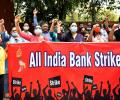
The government can also individually exempt the PSBs, that are to be privatisated from the two Bank Nationalisation Acts. This will bring such lenders under Banking Regulation Act, and make them companies, reports Nikunj Ohri.

Partial lockdown measures may impact movement of labour & goods, they say.

'There are obvious concerns regarding revenue leakage which is understandable, but there are also concerns about whether or not well accepted, judicially tested, fair and proper procedures are being followed during such arrests.'

The idea is to do away with the need for the approval of the Core Group of Secretaries on Divestment for privatisation of companies, especially in non-strategic sectors.
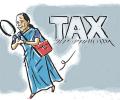
However, the department has not changed ITRs significantly, considering Covid-19 crisis.

For development finance institution to succeed now, the government must stand like a rock behind it and be patient.

Zero-coupon bonds don't give out interest but are issued at a deep discount to the face value, making it difficult to ascertain the net present value.
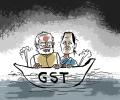
CAG recommended fixing a definite time frame for rolling out simplified GST return forms.
 © 2026 Rediff.com - Advertise with us - Disclaimer - Privacy Policy - Sitemap - Feedback - About us - Terms of use - Grievances